Posted in Uncategorized

Mesopotamia Voyage

“What do you do when you see a gauge rise?”

Professor Budge asked sharply.

“I’d open a valve” I stammered.

“All at once?”

His intensely earnest tone unnerved me. McWhirr had told me how the engineer’s—we called him the Professor—long, solitary hours below decks had gone to his head. Apparently, he was also an amateur linguist and had recently developed a keen interest in ancient Mesopotamian texts. Beyond the maze of pipes, gauges and boilers behind him, a blackboard was mounted on the steel bulkhead on which was written in chalk:

Climb the walls of Uruk, walk its length.

Survey the foundation, study the brickwork.

There—is it not made with oven baked bricks?

Did the Seven Sages not lay its foundations?

The professor went on: “Of course the amount of change in the glass will depend on where the pipe connects to the bottom of the boiler, because there the water column is cooler and gives only a partial…”

“Stations men! We’re in for a dusting!” McWhirr called through the speaking horn.

I rushed up the ladder to see McWhirr squinting through the wheelhouse windows at the dark, lowering clouds. Our boat began to pitch violently in a chop that had suddenly transformed the placid surface of the river into a seething snarl of whitecaps. I’d heard of storms on the Euphrates but, being a strictly blue-water sailor, thought them merely overblown yarns told by salts in the far-flung grog-shops of the globe. But here it was, a veritable hurricane, as if the whole river was pounding against our bows like the fabled flood that crushes walls of stone.

“Steady Mister Budge, it’s only a capful of wind,”

Wrestling the wheel, McWhirr yelled: “Nebuchadnezzar’s Quay is only around the bend. If we can get there before fetching up on a mudbank we’ll be golden. And Mister Spencer, pay heed to the professor. He may have a few bolts loose, but he knows his stuff!”

We’d been commissioned by the University of Pennsylvania Museum to ship antiquities found by the Punnett excavations upriver at Nippur. Captain McWhirr had taken the opportunity to make a few lira by hauling priceless artifacts down a pirate infested river on the paddle-wheel steamer, the Samaramis.
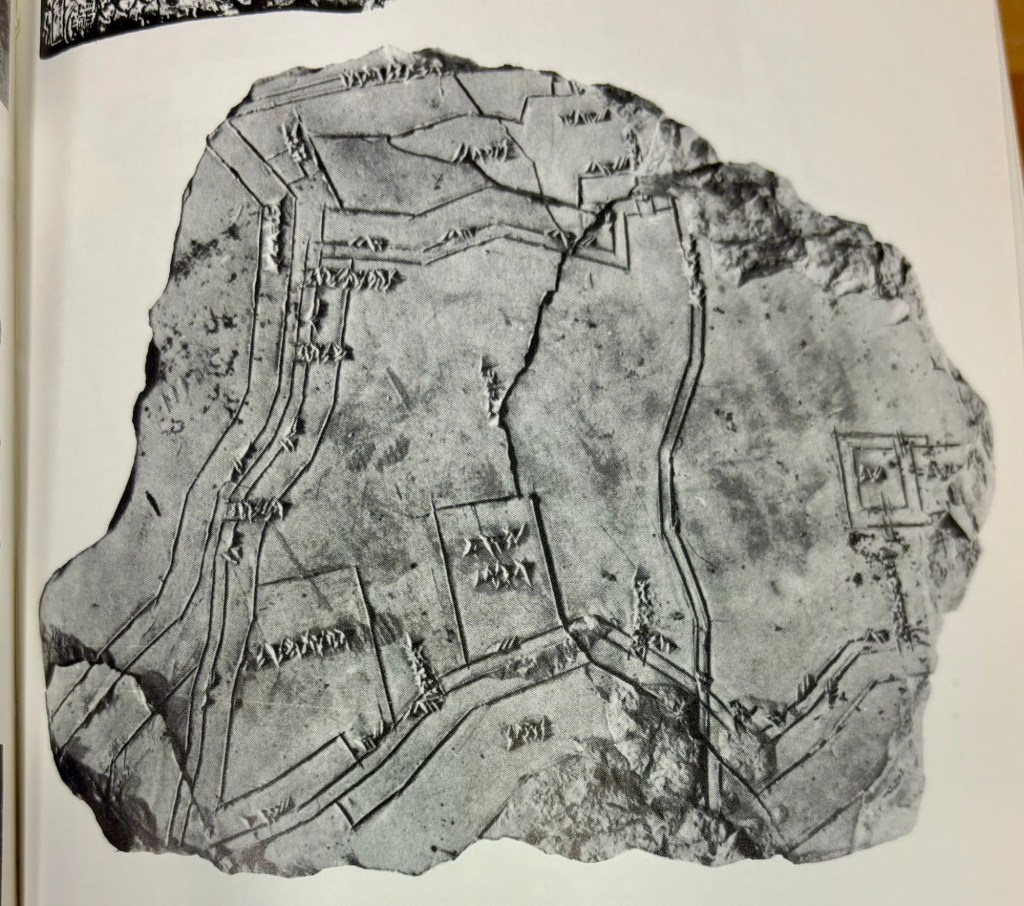
Map of Nippur

Posted in Art, Musings, Uncategorized

The Alchemy of Bird Poop

The real mystery does not behave mysteriously, but speaks a secret language.

                                                                       –Carl Gustav Jung20160919_101939.jpg

Bird poop is the Prima Materia of the opus, the alpha and omega of the great work of the philosophers.  Transmuted and transfigured by the alchemical fire in the sealed retort of the adepts, the excretions of our winged brethren reveal the grand pageant of creation on the microcosmic scale.  I shall endeavor to elucidate the arcana of avian excrement and thereby elevate my humble office of brush bearer to that of high art; to seek amid the white glyphs that adorn the docks a sign that might illuminate secrets of a hidden world.20160504_183526


Bird poop is the mother of all elements, without beginning, existent from all eternity and mixed with the handful of primal earth Adam brought forth from Eden.  It is found always and everywhere.  It contains the Divine presence in the obdurate whiteness of its adamantine– and often goopy–reality.  It is both the beginning and end of the great work, the primal ooze from which the aspirant takes flight into the rarefied spheres of heavenly gnossis.

This post is the first in a series logging my daily circumambulation, bearing the broom of my high office.  The broom is the emblem of adepts, the standard of those who seek the philosopher’s stone among the crustacean beasties that reign over the intertidal zone.

Posted in Musings, Uncategorized

Tales of the Tot Lot 2

So the land swap was stopped when the City Attorney admonished the Council it was their obligation to compel Parks to abide by the terms of the transfer and honor the restrictions.  The Council then voted unanimously to record a conservation easement which would preserve the Tot Lot in perpetuity.

But then, Val Tollefson moved to delay the recording of the Conservation Easement while an access road was worked out between Laughlin, Parks, and the adjacent, Madison Cottages community. It seems the Madison Cottages folk decide it best to accommodate the access road because if the Wyatt Cottages proposal is not granted, a more intrusive and aesthetically disagreeable development might replace the good work of Cutler/Anderson Architects.

Point well taken, but too smacking of defeatist accommodation for me. And since the good folk of Madison Cottages represent a mere fraction of Park’s-going public, why should they have such disproportionate influence?

We await the announcement of the Wyatt Cottages proposal to the Design Review Board with a mixture of dread and anticipation. Will the concerned parties present accurate information this time around regarding the Declarations of Covenants, Restrictions and Reciprocal Easements–remember those?

This is but a sketch of a convoluted tale of intrigue. There remain such details as the erroneous reports by the County Assessor, a land value increase of nearly 80% the very year the property was transferred to Parks, the “disappearance” of the studio from the assessor’s building report 2 years before it was demolished, the miraculous appearance of a ghostly pole-frame building, mysterious address changes, and specious readings of legal terms.

It seems we are afflicted with a double denial of many troubling aspects of the concurrent Wyatt Cottages and Suzuki developments. On the one hand, the Madison Cottages community–as well as the Friends of Suzuki– sweep the shady history of land transfers to Parks under the rug. On the other, we have the present Council embarrassed by their part in obscuring Parks and the previous Council’s questionable deeds. Add to this HRB’s reluctance to jeprodise Council support by allowing public scrutiny of these sketchy practices, and the tight-lipped, good old boys in the Building Department, and you have a first class cover-up.

All sides of this debate can be said to lack transparency.  We need a fresh and honest perspective on the issues that shape the island’s future. We need tranlate our high ideals of inclusiveness and economic equality into practical solutions while preserving the precious remnants of our natural environment.

Posted in Art, Musings, Paintings in Progress

Tales of the Tot Lot part 1

The long history of the Tot Lot demands an uncommon level of attention and patience; I hope my good readers might bear with this convoluted tale about a tiny children’s playground in the heart of Whimsical Winslow.

The Tot Lot tale extends as far back as 1997, when Randy Varga sold the property to the City  with a “Declaration of Covenants, Restrictions and reciprocal Easements” which specified the property be preserved as a park.  He also called  for the preservation of a lovely art studio which I occupied rent-free as an artist-in-residence and caretaker–though my caretaking often fell short with all the demands of creating art.

 It was a time when our last elected Mayor held a prominent position on the Kitsap Regional Coordinating Council– though that detail is perhaps merely coincidental–after all, my significant other says I watch too many detective movies, and such things are only natural with all the demands of leadership and the equivocal nature of the greater good.

 Despite the prohibitions clearly spelled out in the Declarations, outcry of concerned citizens, several emails citing restrictions, heated Parks Board meetings, and a front page article in the Kitsap Sun, the studio was destroyed in 2011, just two years after it was transferred to the good, art-promoting BIMPRD–or whatever they’re called.

In February of last year, a land swap was proposed where the playground would be traded for a lot half its size on the corner of the island’s busiest intersections.  Well, you can imagine the outcry of local, island mothers over that scenario.

 Truth is, a big money developer had bought two properties adjacent the Tot Lot and wanted to realize a tidy profit by consolidation, and create a greater Wyatt Cottages.  Problem is, this is a greater good that mainly benefits said developer. .

So get this, the developer and Parks sign on as co-applicants to the Design Review Board for this swap which would grease the skids for this big money project on the homestead of Winslow’s founding father, Reilly Hoskinson, who settled it God knows when.  They fill out a legal form declaring there are no impediments to this swap, though–because of the brouhaha less than 5 years before–they obviously knew of the 1997 restrictions.

 So I give Val Tollefson a copy of the restrictions and the Council halts the swap, reminding Parks of their obligation to honor terms of the transfer.

To be continued…

Posted in Art, Off the Wall, Poulsbo, Uncategorized

Winslow Heat–Flashback

So I took the Prince Ivan thoroughfare up the hill to the east of town to where Joel had said E.G’s new developments were. It seems a big mall was in the works and EG, with the backing of some Ohio LLC, was building a pharmaceutical emporium and a corgie day care center. There was a broohaha when local poodle lovers had protested this plan as being discriminatory against their chosen breed, and had filed a complaint with the City to that effect. But the mayor, being a member of the Little Siberia corgie society, set them straight on that score, and the permit had fairly sailed over the desk of her brother Vinnie in the planning department.

I turned onto a gravel road that led north into the woods. A white and yellow building notice was spiked on the wide based of an old-growth cedar. I got out and walked down the road until I saw a short old guy with ruddy complexion being led by, what appeared to be, his grand daughter. After a respectful greeting I asked:

“Did you know this parcel is being developed by a mobster?”

I’ve been told, that for a private eye, I exhibit a marked lack of discretion, and this was not lost on his grand daughter who attended his obvious infirmity with touching solicitude. He hobbled, leered at me with a sideways grin, and said in a thick, southern Italian accent:

“That’s good. It will be protection.”

I got back into the Dart, lit a cigarette, and thought it over. All the seemingly casual series of events now funneled into an inevitable vortex in which the alluring image of Lupe flowed with languid abandon in the smoky arabesques of my square.

I suddenly became quite nervous indeed. For here in this lonely stretch of woods, all the crazy, disconnected events that transpired on the rock added up in a most disconcerting manner. It was as if all the paranoid imaginings of my troubled adolescence had come to realization; and the events of the past week had formed into a clear pattern. Most of all, I saw that no interference in the schemes of real estate speculators to realize a tidy profit would be welcome—especially such interference as might be offered by a simple artist like myself who does detective work as a sideline.

I was having, what we used to call, a flashback, and all these horrid imaginings unfixed my hair and made my heart knock frantically against all the studied uses of cool. The line between real and imagined dangers  becomes very sketchy at times, and steadier mugs than myself have found serious trouble in extravagant delusions and a swell dame in a skin-tight, sequined dress. At such moments it behooves a simple gumshoe like myself to breathe deep, take a powder, and intone the sacred mantra: Fuck that.

Posted in Old Hand's Indonesian Voyage

Old Hand’s Indonesian voyage–part 6

 “To the Toer wharf,”  said McWhirr. 

 With indomitable energy, Rubio peddled his bicak and sang Unchained Melody for all he was worth.  For reason I’ve yet to fathom, Indonesians consider the Righteous Brothers to be the apex of musical accomplishment.  We soon arrived at the dock to see a steamship being loaded by scrawny Malays carrying heavy sacks of rice.  She was an absurdly stout vessel of Victorian pedigree, whose small wheelhouse perched on her coach roof like a petite hat on a frumpy, lady dowager.  On the ornate paddle boxes were emblazoned the words: The East India Company.  The thick cloud issuing from her smokestack showed she was building up a head of steam for immanent departure.

As we ascended the ladder to the wheelhouse, I saw that the balustrade of the gallery which extended from the house to the rails was ornamented by a carved frieze of twined figures writhing in chained attitudes of torment.  We were about to knock on the weathered, oak door when, through the blinds, came a low voice intoning:

“It is thou, O river, who judges man’s judgment… O river of sanctuaries. ..O river of light…”

 
McWhirr opened the door. a beefy guy in shorts, stockings and pith helmet bent over a chart table reading from a weathered scroll.  Without turning he said: “What say ye,? Does the ocean refuse the river’s tribute?”
  He fell silent and gazed out the wheelhouse windows.  The dawn light shone violet, as though the dirty chaos of the waterfront had been suddenly transfigured by the celestial Light of Glory.
This was our engineer, Thaddeus Budge, and a wackier coot I’ve never known.  But Hans had assured us that he would keep the old Polly steaming past mud banks and typhoons; the first we were to strike in short order, the latter, we were to find, swept through the middle reaches of the Ciliwung with all the frenzied vehemence of doomsday.
 
“Full ahead, Mister Budge,” McWhirr called into the speaking horn by the wheel.
 
With a creaking shudder, the paddle wheels began to churn the water into brown froth, and we bore away from the wharf into the gently flowing waters of the River.
  We chugged past endless shacks and mountains of rusty, flattened cars.  It was as though alluvial deposits had washed up all the planned obsolescence of millennia; and the foundering hulk of Pantijasila– those lofty 5 principles of the new Indonesia–had fetched up on a reeking bank of industrial wast and these half-naked laundresses whopping sarongs in the stagnant waters of the canal were singing an eerie monody for some dimly descried apocalypse.
 
The only charts we had were from the 20th century.  I searched for sailing directions to the upper reaches of the Ciliwung in vain and ransacked the tattered tomes that lined the mahogany shelves of the wheelhouse for any clue that might disclose the real purpose of the voyage we were fated to undertake.  
 
“That Bekert guy gives me the creeps.”  McWhirr’s said.  “I didn’t believe for a minute all that bull about his interest in antiquities.  He might just be sending us on a fool’s errand in this tin pot steamer.” 
  McWhirr unrolled a dog-eared chart that look like it was printed during Leopold’s reign, pointed to a particularly sepentine section of the river, and said:
“There’s death at every bend of this blasted river.  There are treacherous sandbanks and bandits that will cut your throat for a song. Here is the passage of Bulak Bindah.  Winds can funnel between those rocks like the fiends of hell.”
“Aye, on top of that, the very guards appointed by the museum trustees who sponsor these excavations deal in the illicit trade of artifacts. Their collusion with Javanese authorities can land innocent shippers like us in jail. 
“Crooked trade in antiquities is nearly as old as civilization itself. These sites had already been plundered in ancient times by looters who sold to dealers in Bangkok.  Now the plunder is conducted on an industrial scale by the East India Company. The stones of sacred Temples are looted to build the brutal towers of Tomorrowland and the stolen images of the Holy Immortals now entice consumers, like sheep, into endless malls of mediocrity.  This must stopped.”
 
Like some portly, winded spinstress, the Polly steamed past camps of water buffalo herders, laptop recyclers, and armed horsemen whose dark eyes followed her wake with unconcealed contempt.