Posted in Euphrates Voyage, Saturnius McWhirr stories

Mesopotamia Voyage 3–Osman

“What is the greatest virtue a steam man may have to best fulfill his role?“ The Professor was already going strong before my foot touched the last wrung of the companionway ladder into the engine room.

“I don’t know.”

“A steam man’s greatest virtue is reason and moderation”

“I’m no wiz at math, but that sounds like two virtues to me.”

Budge, unhearing, went on:

“The three essential elements of the steam man’s art is fire, water and air. Only the most equitable balance between them ensures safe operation; and therefore an auspicious outcome to our common endeavor. And what is our common endeavor?”

“To not be blown to smitherines?”

“Yes, for one. And our number one priority.” He went to his blackboard and drew a pyramid.

“The harmonious disposition of the three elements, fire, water and air, is essential for a well-ordered steam engine. These three elements form an equilateral triangle with air at the apex. The dynamic between them produces the miraculous, fourth element, steam.” At the last word, he hit the blackboard so hard the chalk broke. “What would you say is an analogous model in other aspects of life?”

“You have me there Mister Budge.”

“A corresponding relationship exists in the three parts of the human soul: the calculating nature, the spirited nature, and the grasping nature—appetite. Just as the equitable disposition of air, Fire and Water creates the conditions to fuel our ship, so the harmonious accord of the three parts of soul; each doing their part in the appropriate measure and time, ensures the success of our collective enterprise. But it’s essential that all parts be ruled over by the faculty of reason. Disequilibrium among the parts—or elements—would spell disaster.” Here he erased the triangle with a dramatic flourish.

“Mister Spencer, report topside. We are approaching the station. Prepare to take on a passenger.”

I went into the wheelhouse as we neared the wharf. McWhirr said: “He’s a big shot named Osman Hamdi Bey, director of the Imperial Ottoman Museum. Word is, he’s been a royal pain in the arse in getting authorization for the Dig at Nippur—a real stickler for rules. His reputation for obstinacy is well known to the trustees back in Pennsylvania. There’s rumors about an article he wrote to help his buddy and patron, Midhat Pasha, whitewash the Bulgarian Massacre. He probably wants to check us out to make sure we don’t steal the loot.”

I could hear the revulsion in McWhirr’s voice. There’s nothing he abhors more than man’s inhumanity to man. The massacre was a horrible war crime and had liberals in England all worked up; calling for revocation of British support for the Ottoman Empire. But Osman’s spectacular finds in Syria—and securing them for the Ottoman Imperial Museum—had made him famous. It had also made him anathema to the covetous British Museum officials who were incensed that the treasures should be held in the “barbarous” hands of the Turks. So who is to say what was really behind the outrage at Osman’s alleged role as apologist for brutal treatment of the April Revolutionaries by the Ottoman army?

The landing was covered by an absurdly large pile of luggage attended by two Arab porters. Then a tall, lanky guy in a fez walked slowly up the gangplank with the dignified gate of man of affairs. For all his reputation, he wasn’t much to look at. But he was a real professor, not some bargain, boiler room philosopher like our engineer, Thaddeus Budge.

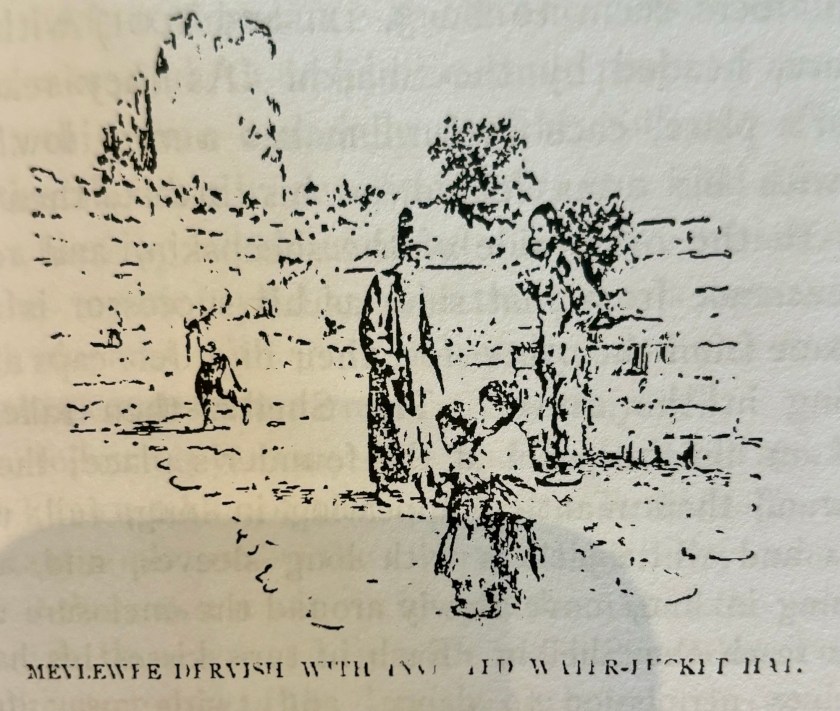
Osman’s effects were loaded by the porters who, as it turned out, were personal assistants accompanying him aboard for the trip to Nippur. They quickly spread their mats under a striped tarpaulin on the foredeck and set to making coffee over a charcoal stove.

“Welcome aboard, Mister Bey.”

“Thank you, but your kind greeting is redundant. Bey actually means “mister.” Nonetheless, it’s a pleasure to finally meet Saturnius McWhirr. I was pleased to hear that the most august, Pennsylvania Museum board has hired you to ensure the safe transport of our precious antiquities.”

“Your fame precedes you as well, sir. But where, if I may be so bold to ask, are we to stow all your gear? Or should we just chuck it all overboard now in the interests of expediency?”

Osman’s eyes glared from behind his prince Nez glasses. Thus began the strange, unlikely relationship of the two most remarkable men I’ve ever known.

Posted in Uncategorized

Mesopotamia Voyage

“What do you do when you see a gauge rise?”

Professor Budge asked sharply.

“I’d open a valve” I stammered.

“All at once?”

His intensely earnest tone unnerved me. McWhirr had told me how the engineer’s—we called him the Professor—long, solitary hours below decks had gone to his head. Apparently, he was also an amateur linguist and had recently developed a keen interest in ancient Mesopotamian texts. Beyond the maze of pipes, gauges and boilers behind him, a blackboard was mounted on the steel bulkhead on which was written in chalk:

Climb the walls of Uruk, walk its length.

Survey the foundation, study the brickwork.

There—is it not made with oven baked bricks?

Did the Seven Sages not lay its foundations?

The professor went on: “Of course the amount of change in the glass will depend on where the pipe connects to the bottom of the boiler, because there the water column is cooler and gives only a partial…”

“Stations men! We’re in for a dusting!” McWhirr called through the speaking horn.

I rushed up the ladder to see McWhirr squinting through the wheelhouse windows at the dark, lowering clouds. Our boat began to pitch violently in a chop that had suddenly transformed the placid surface of the river into a seething snarl of whitecaps. I’d heard of storms on the Euphrates but, being a strictly blue-water sailor, thought them merely overblown yarns told by salts in the far-flung grog-shops of the globe. But here it was, a veritable hurricane, as if the whole river was pounding against our bows like the fabled flood that crushes walls of stone.

“Steady Mister Budge, it’s only a capful of wind,”

Wrestling the wheel, McWhirr yelled: “Nebuchadnezzar’s Quay is only around the bend. If we can get there before fetching up on a mudbank we’ll be golden. And Mister Spencer, pay heed to the professor. He may have a few bolts loose, but he knows his stuff!”

We’d been commissioned by the University of Pennsylvania Museum to ship antiquities found by the Punnett excavations upriver at Nippur. Captain McWhirr had taken the opportunity to make a few lira by hauling priceless artifacts down a pirate infested river on the paddle-wheel steamer, the Samaramis.

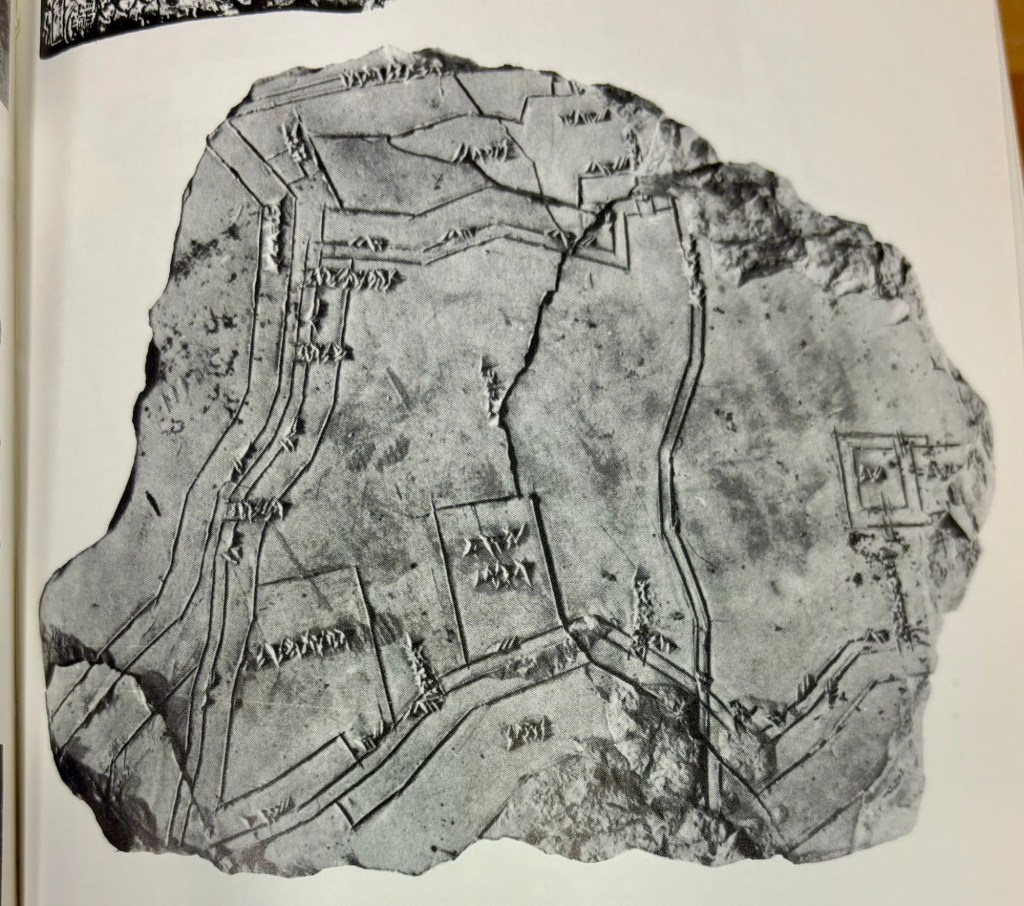
Map of Nippur

Posted in Aria, Art, libretto, opera, poetry, politics, Stage set design

Damnation of Drumph storyboard continued

Act 3, scene 1–Bedminster Cemetary, the Bardo of hungry ghosts. Demeter emerges from the woods at the base of a rocky hill to challenge Drumph.

Dem: Who dares violate the dark Goddess’s sanctum?

Drumph: This place has tremendous potential. Only the best people will come to my Ultimate Death theme park.

Chorus: All will come to the awesomely, spectacular, incredible Death.

Drumph: Malignia’s friend, Winston, can do the decor. Real class.

Chorus: Doom golden doom awaits the discriminting dead.

Posted in Old Hand's Indonesian Voyage

Old Hand’s Indonesian voyage–part 6

 “To the Toer wharf,”  said McWhirr. 

 With indomitable energy, Rubio peddled his bicak and sang Unchained Melody for all he was worth.  For reason I’ve yet to fathom, Indonesians consider the Righteous Brothers to be the apex of musical accomplishment.  We soon arrived at the dock to see a steamship being loaded by scrawny Malays carrying heavy sacks of rice.  She was an absurdly stout vessel of Victorian pedigree, whose small wheelhouse perched on her coach roof like a petite hat on a frumpy, lady dowager.  On the ornate paddle boxes were emblazoned the words: The East India Company.  The thick cloud issuing from her smokestack showed she was building up a head of steam for immanent departure.

As we ascended the ladder to the wheelhouse, I saw that the balustrade of the gallery which extended from the house to the rails was ornamented by a carved frieze of twined figures writhing in chained attitudes of torment.  We were about to knock on the weathered, oak door when, through the blinds, came a low voice intoning:

“It is thou, O river, who judges man’s judgment… O river of sanctuaries. ..O river of light…”

 
McWhirr opened the door. a beefy guy in shorts, stockings and pith helmet bent over a chart table reading from a weathered scroll.  Without turning he said: “What say ye,? Does the ocean refuse the river’s tribute?”
  He fell silent and gazed out the wheelhouse windows.  The dawn light shone violet, as though the dirty chaos of the waterfront had been suddenly transfigured by the celestial Light of Glory.
This was our engineer, Thaddeus Budge, and a wackier coot I’ve never known.  But Hans had assured us that he would keep the old Polly steaming past mud banks and typhoons; the first we were to strike in short order, the latter, we were to find, swept through the middle reaches of the Ciliwung with all the frenzied vehemence of doomsday.
 
“Full ahead, Mister Budge,” McWhirr called into the speaking horn by the wheel.
 
With a creaking shudder, the paddle wheels began to churn the water into brown froth, and we bore away from the wharf into the gently flowing waters of the River.
  We chugged past endless shacks and mountains of rusty, flattened cars.  It was as though alluvial deposits had washed up all the planned obsolescence of millennia; and the foundering hulk of Pantijasila– those lofty 5 principles of the new Indonesia–had fetched up on a reeking bank of industrial wast and these half-naked laundresses whopping sarongs in the stagnant waters of the canal were singing an eerie monody for some dimly descried apocalypse.
 
The only charts we had were from the 20th century.  I searched for sailing directions to the upper reaches of the Ciliwung in vain and ransacked the tattered tomes that lined the mahogany shelves of the wheelhouse for any clue that might disclose the real purpose of the voyage we were fated to undertake.  
 
“That Bekert guy gives me the creeps.”  McWhirr’s said.  “I didn’t believe for a minute all that bull about his interest in antiquities.  He might just be sending us on a fool’s errand in this tin pot steamer.” 
  McWhirr unrolled a dog-eared chart that look like it was printed during Leopold’s reign, pointed to a particularly sepentine section of the river, and said:
“There’s death at every bend of this blasted river.  There are treacherous sandbanks and bandits that will cut your throat for a song. Here is the passage of Bulak Bindah.  Winds can funnel between those rocks like the fiends of hell.”
“Aye, on top of that, the very guards appointed by the museum trustees who sponsor these excavations deal in the illicit trade of artifacts. Their collusion with Javanese authorities can land innocent shippers like us in jail. 
“Crooked trade in antiquities is nearly as old as civilization itself. These sites had already been plundered in ancient times by looters who sold to dealers in Bangkok.  Now the plunder is conducted on an industrial scale by the East India Company. The stones of sacred Temples are looted to build the brutal towers of Tomorrowland and the stolen images of the Holy Immortals now entice consumers, like sheep, into endless malls of mediocrity.  This must stopped.”
 
Like some portly, winded spinstress, the Polly steamed past camps of water buffalo herders, laptop recyclers, and armed horsemen whose dark eyes followed her wake with unconcealed contempt.
Posted in Old Hand's Indonesian Voyage

Old Han’s Indonesian Voyage–part 4. I meet the Great Marlow

DSC01918

Soon, having to pump the bilges, I made my way to the back of the Stygian nightclub where I saw a distinguished, bearded gent who sat before an old Underwood typewriter. His gaunt frame mummified in musty, moth-eaten tweeds while his ponderous brows were wreathed in a smokey corona of golden light. On closer inspection, I saw he was merely one of the automated fortune-tellers found in the Batavian Capitol. His face was vaguely familiar. On the table front was displayed a sign which read:  The Great Marlowe. Your fortune 25 cents.
I dropped a coin into the slot. There was a slight sound from under the table which again halted, began again and increased in speed and volume until the music of bellows and steam pipes sounded over a cacophony of grinding gears like the high registers of Saint Mark’s Cathedral organ. The tweedy automaton typed, sputtered to a wheezing halt and ejected a sheet of paper at my feet.
It read:  You will soon meet a distinguished monkey.
Posted in Uncategorized

Old Hand’s Indonesian Voyage–part 3

We piled in the skiff and I rowed toward a dilapidated pierhead while McWhirr continued his narration.
“My grandfather also told a darker tale. He said the streets of old Batavia were paved with sorrow, the walls built with the grief of mothers who toiled over an illusory harvest, it’s ramparts manned by desiccated souls who invested all their goods in the virtual fun-house of Mammon.“

We ascended the quay to the cobbled road.  McWhirr’s words had conjured a fantastic image of despair, though, in my green youth, I could scarce fathom the depths of his narration.
McWhirr hailed a bicak.  How this small guy was going to haul us and our seabags in the little tricycle was beyond me. His name was Rubio.  He was a grinning, eager pilot who pedaled like a fiend and navigated Jakarta like some Vasco de Gama of the alleyways.
Rubio brought us to the crumbling, neo-classical facade and we passed through the weathered teak door into the club.  While McWhirr ordered a couple pints I looked around.  A Strawberry Alarm clock tribute band blasted onstage.
Soon McWhirr came with the drinks and said: “Here’s to the Queen.”

I picked up a battered book lying on the table and read:
–And it came to pass that a great swarm of splog descended upon the land and the
soundcloud was darkened with idle slander and empty promises of sensual delights.  Worshippers of the true faith were subjected to the false blandishments of priests and the perfidious purveyors of illusory commerce.  And the once mighty creatives of the realm looked upon their followers and found naught of artistic merit and grew heavy in spirit, seeing therein ought but Jezebelian allurements by comely maids in unseemly attitudes of licentious repose–

“I’m glad I wore my sea-boots,” said McWhirr.
“Listen to this, Captain:”
–And lo, the verminous swarm of splog grew apace, and the goodly scions of the realm gnashed their teeth in anguish, for their earnest, artistic efforts were devoured by the black vultures of Satan. The fat herds of the righteous became but reeking carrion for the voracious appetites of the infidels–
“What fools would steal such windy bombast anyway?” asked McWhirr.
The joint appeared to serve a clientele of wharf-rats and scurvy rum-bots from dilapidated bum-boats.  One smelly clutch of waisters clicked madly at their laptops, their rummy faces aglow in the in the villainous blue light.
“Get this, a real Byron he thinks he is,” said a muscled hulk in a pink tutu.

“Ya really read that BS? “
Asked his mate in a voice  that sounded hollow and grating-like 50 fathoms of hause-fouled chain.
I’d heard of the splog pirates, but thought them mere paranoid tales by rummy tars around the fo’c’sle stove. And now here they were, as big as life, waylaying the earnest efforts of my myself and my literary colleagues like the nefarious ship wreckers luring unwary vessels with false
lights on the storm-wracked coast of Cornwall.

I continued reading:

-The once proud sites of the righteous became barren wastes of vacuous splogs and brazen images of bouncing titties–

“Maybe there is something to it after all,” says McWhirr.

“Aye, Captain. And look what we have now in this rank grog-shop of the internet-a foul lot of brazen cut-throats  who’d just as soon steal your traffic as say how-do-ye-do.”

One such galoot, a skanky brigand with a striped shirt and cutlass, approached the bar next to McWhirr with the slithery movement of a wolf eel saying:

“Eh mates, stand us a pint.”

I hastened to intervene.

“My good sir, may I introduce Saturnius Machirr?”

At this, the miscreant grew pale as an albino beluga and withdrew with an obsequeous bow.

“Most honored to meet you.”

Posted in Old Hand's Indonesian Voyage, Saturnius McWhirr stories

Old Hand’s Indonesian Voyage–episode 1

The bewitching breezes that had vexed our northerly course along the bleak, rocky coast gave way to an absolute calm as we steamed into Sunda Kelepa Harbour and brought up under the ornate, lofty spires of Jakarta.  It was as though the anchorage were under the spell of some vengeful deity that held the stagnant seaport in irons– a fitful sleep of waking dream. I gazed up at Jakarta’s towers and heard, high on the ramparts, Rama’s  gong-struck plea to deliver a flute-weeping Sita from Ranga’s jangling curse.  A sword held against a blood-red sky by masked Barong tragediennes brought down the threadbare, red curtain in the ritual re- enactment of the primal leave-taking and arrival; when carved gods glared from the bowsprit, holding vigilant watch against marauders while we were moored off the savage isle of dreams.  I too, have sat hungry around those ancestral fires, a villan, hero or common swab, subject to the changeable turns of karmic law..

.“Skip lively, Mister Spencer.”

The resonant voice was hoarse, as if weathered by eternal watches on the Greenland ice, or worn ragged from hurling oaths into the teeth of a gale. I flaked out 5 fathoms of chain from the locker with hamfisted elegance.

“Nicely done, lad. Ye’ll be a sailor before long.”

McWhirr is a pain in the ass sometimes. He’s a relic of working sail and can be as dark as Ahab in rehab on a bad hair day.  He stood stark against the red sky like a weathered piling on a  rocky cape.  Light flickered through the dark shrouds, his shadow looming on the limp stays’l behind him, as if projected on a movie screen.  The  harrowing passage through the Sunda Strait had frayed my nerves and I groped clumsily the 3/8ths chain from the locker.

“All right, Mister Spencer.”

I let go the anchor. There sounded a low rumble as I paid out 3 fathoms of chain into the muddy bottom of Sunda Kelapa Harbour.

“Have you paid out enough scope, lad?”

“I cast the anchor in 6 fath…” I said.

“Avast, Ya greenhorn! You don’t “cast” anchors. This isn’t fly-fishing! My gorge rises at such lubberly misuse of sailing language.”

His wrath, like a line-squall, subsided as rapidly as it came.

“Did you know that to raise an anchor you must first let it go?”

“That’s true, sir.”

He always makes these pithy pronouncements like they were scripture.  And, for McWhirr the act of sailing is a religious rite. He hails from Zoroastrian, Quaker stock and, for him, a ship is a vessel to carry his weary spirit ascending through the seven concentric spheres of corporeality to the final landfall of essential being. He has seen the beatific vision reflected on the sea’s mirror and it draws him ever northward in search of the true face of divinity behind the mask of appearance.