Posted in Euphrates Voyage, Saturnius McWhirr stories

Mesopotamia Voyage 3–Osman

“What is the greatest virtue a steam man may have to best fulfill his role?“ The Professor was already going strong before my foot touched the last wrung of the companionway ladder into the engine room.

“I don’t know.”

“A steam man’s greatest virtue is reason and moderation”

“I’m no wiz at math, but that sounds like two virtues to me.”

Budge, unhearing, went on:

“The three essential elements of the steam man’s art is fire, water and air. Only the most equitable balance between them ensures safe operation; and therefore an auspicious outcome to our common endeavor. And what is our common endeavor?”

“To not be blown to smitherines?”

“Yes, for one. And our number one priority.” He went to his blackboard and drew a pyramid.

“The harmonious disposition of the three elements, fire, water and air, is essential for a well-ordered steam engine. These three elements form an equilateral triangle with air at the apex. The dynamic between them produces the miraculous, fourth element, steam.” At the last word, he hit the blackboard so hard the chalk broke. “What would you say is an analogous model in other aspects of life?”

“You have me there Mister Budge.”

“A corresponding relationship exists in the three parts of the human soul: the calculating nature, the spirited nature, and the grasping nature—appetite. Just as the equitable disposition of air, Fire and Water creates the conditions to fuel our ship, so the harmonious accord of the three parts of soul; each doing their part in the appropriate measure and time, ensures the success of our collective enterprise. But it’s essential that all parts be ruled over by the faculty of reason. Disequilibrium among the parts—or elements—would spell disaster.” Here he erased the triangle with a dramatic flourish.

“Mister Spencer, report topside. We are approaching the station. Prepare to take on a passenger.”

I went into the wheelhouse as we neared the wharf. McWhirr said: “He’s a big shot named Osman Hamdi Bey, director of the Imperial Ottoman Museum. Word is, he’s been a royal pain in the arse in getting authorization for the Dig at Nippur—a real stickler for rules. His reputation for obstinacy is well known to the trustees back in Pennsylvania. There’s rumors about an article he wrote to help his buddy and patron, Midhat Pasha, whitewash the Bulgarian Massacre. He probably wants to check us out to make sure we don’t steal the loot.”

I could hear the revulsion in McWhirr’s voice. There’s nothing he abhors more than man’s inhumanity to man. The massacre was a horrible war crime and had liberals in England all worked up; calling for revocation of British support for the Ottoman Empire. But Osman’s spectacular finds in Syria—and securing them for the Ottoman Imperial Museum—had made him famous. It had also made him anathema to the covetous British Museum officials who were incensed that the treasures should be held in the “barbarous” hands of the Turks. So who is to say what was really behind the outrage at Osman’s alleged role as apologist for brutal treatment of the April Revolutionaries by the Ottoman army?

The landing was covered by an absurdly large pile of luggage attended by two Arab porters. Then a tall, lanky guy in a fez walked slowly up the gangplank with the dignified gate of man of affairs. For all his reputation, he wasn’t much to look at. But he was a real professor, not some bargain, boiler room philosopher like our engineer, Thaddeus Budge.

Osman’s effects were loaded by the porters who, as it turned out, were personal assistants accompanying him aboard for the trip to Nippur. They quickly spread their mats under a striped tarpaulin on the foredeck and set to making coffee over a charcoal stove.

“Welcome aboard, Mister Bey.”

“Thank you, but your kind greeting is redundant. Bey actually means “mister.” Nonetheless, it’s a pleasure to finally meet Saturnius McWhirr. I was pleased to hear that the most august, Pennsylvania Museum board has hired you to ensure the safe transport of our precious antiquities.”

“Your fame precedes you as well, sir. But where, if I may be so bold to ask, are we to stow all your gear? Or should we just chuck it all overboard now in the interests of expediency?”

Osman’s eyes glared from behind his prince Nez glasses. Thus began the strange, unlikely relationship of the two most remarkable men I’ve ever known.

Posted in Euphrates Voyage

At Nebuchadnezzar’s Quay

The Samamaris was making frightful leeway as we rounded the bend towards our moorings at Nebuchadnezzar’s quay. But it lightened somewhat on our approach and Captain McWhirr eased her up as if it were a Sunday family cruise. The storm, fierce as it had been, died down as quickly as it had risen.

“Make off the bowline to the second bollard Mister Spencer.”

“Easy now professor.”

After making fast and shutting down the boiler, we jumped ashore for a look around. It was an ancient mound—or tell—that slowly sloped down into the depths of the river to form the quay. The lower strata was made of baked mud bricks coated with bitumen, some of which were stamped with the seal of Nebuchadnezzar himself. To the Northwest, the mound rose high against the hot afternoon sun. An Arab Shepard stood gazing down at this apparition of a stern-wheel steamer with a wheelhouse that sat on her deck like a little hat on a frumpy British dowager.

Soon, a short guy in a white suit and pith helmet walked up and made an obsequious bow.

“I am Joesph Cairo of the customs office. Would you be the Captain of the steamer Samaramis?”

“I would.”

“The customs office has impounded your vessel due to a minor technical matter regarding…”

“Bakshish?” interrupted McWhirr.

“I wouldn’t put it so indelicately. But there are certain processing costs incurred by the Museum trustees sponsoring this worthy effort to preserve our priceless treasures for the future edification and enrichment of both of our great nations.“

“For the enrichment of somebody anyway.”

Cairo smiled placidly: “I heard you were a man of few but laconic words, Captain McWhirr. Shall we go to my office? It’s just up the promenade.”

McWhirr is well accustomed to Cairo’s ilk. Recent digs and spectacular finds have brought out sleazy shysters to exploit the ignorance of scholars and archeologists. Especially vulnerable to such scams are the rapture tourists, who seek affirmation of scripture by marking the river’s depths, which— as is prophesied in the Book of Revelations—will dry up as a sign of the end times. The chandler in Bagdad enjoys a brisk trade selling sounding gear to these New Age fundamentalists. But these days, all that’s needed is a pool cue, so they may have a point after all. An inch drop will have them speaking in tongues, talking to lizards and enthralled by the thought of total annihilation of a third of humankind. But we were concerned with more prosaic matters regarding the water’s depth. A blow like we had earlier could drive our shallow draft vessel sideways onto the bank, prey to bandits who roam this desert with impunity.

But events that were to unfold cast a new light on the prophesied end-times, and gave us—if not eternal salvation—a hard-won appreciation for the convoluted twists of fate.

We walked up the towpath—or “promenade” as Cairo so generously called it—and came to the customs house. It was no more than a shack of mud brick and bundles of reeds. A guy in a green visor and sleeve garters sat next to a fake banana plant contemplating a calendar. This month’s model was Theda Bara tricked out as the Goddess of the Underworld. Those dark eyes followed me around the shack; eyes that can go from abject terror to ecstatic elation without so much as a smoke break between takes. We paid the gentlemen who were, after all, only playing their parts in the perpetual exchange of vice and virtue; where everything evens out in the end—more or less.

Later, as I lay on the pilot house bunk listening to the eerie keening of jackels far into the night, I could hear the professor intone:

“He set sail; the father set sail,

Enkei the God of Wisdom set sail for the underworld

……the waters of the sea devoured the bow of his boat like wolves.

The waters of the sea struck the stern like lions.”

I flowed downriver. The bleak boatman had abandoned his tiller, leaving me adrift. But I escaped shipwreck and the scene suddenly changed. I gazed into the blue eyes of the glittering goddess. We embraced and kissed. It was a sweet soul kiss that I could still taste when I woke to McWhirr’s hail.

“All hands on deck!”

McWhirr runs a tight ship, even if it is a mode of propulsion he thinks unseemly for a man of working sail.

O. Handy Bey—Director of the Imperial Ottoman Museum, 1888 CE
Posted in Uncategorized

Mesopotamia Voyage

“What do you do when you see a gauge rise?”

Professor Budge asked sharply.

“I’d open a valve” I stammered.

“All at once?”

His intensely earnest tone unnerved me. McWhirr had told me how the engineer’s—we called him the Professor—long, solitary hours below decks had gone to his head. Apparently, he was also an amateur linguist and had recently developed a keen interest in ancient Mesopotamian texts. Beyond the maze of pipes, gauges and boilers behind him, a blackboard was mounted on the steel bulkhead on which was written in chalk:

Climb the walls of Uruk, walk its length.

Survey the foundation, study the brickwork.

There—is it not made with oven baked bricks?

Did the Seven Sages not lay its foundations?

The professor went on: “Of course the amount of change in the glass will depend on where the pipe connects to the bottom of the boiler, because there the water column is cooler and gives only a partial…”

“Stations men! We’re in for a dusting!” McWhirr called through the speaking horn.

I rushed up the ladder to see McWhirr squinting through the wheelhouse windows at the dark, lowering clouds. Our boat began to pitch violently in a chop that had suddenly transformed the placid surface of the river into a seething snarl of whitecaps. I’d heard of storms on the Euphrates but, being a strictly blue-water sailor, thought them merely overblown yarns told by salts in the far-flung grog-shops of the globe. But here it was, a veritable hurricane, as if the whole river was pounding against our bows like the fabled flood that crushes walls of stone.

“Steady Mister Budge, it’s only a capful of wind,”

Wrestling the wheel, McWhirr yelled: “Nebuchadnezzar’s Quay is only around the bend. If we can get there before fetching up on a mudbank we’ll be golden. And Mister Spencer, pay heed to the professor. He may have a few bolts loose, but he knows his stuff!”

We’d been commissioned by the University of Pennsylvania Museum to ship antiquities found by the Punnett excavations upriver at Nippur. Captain McWhirr had taken the opportunity to make a few lira by hauling priceless artifacts down a pirate infested river on the paddle-wheel steamer, the Samaramis.

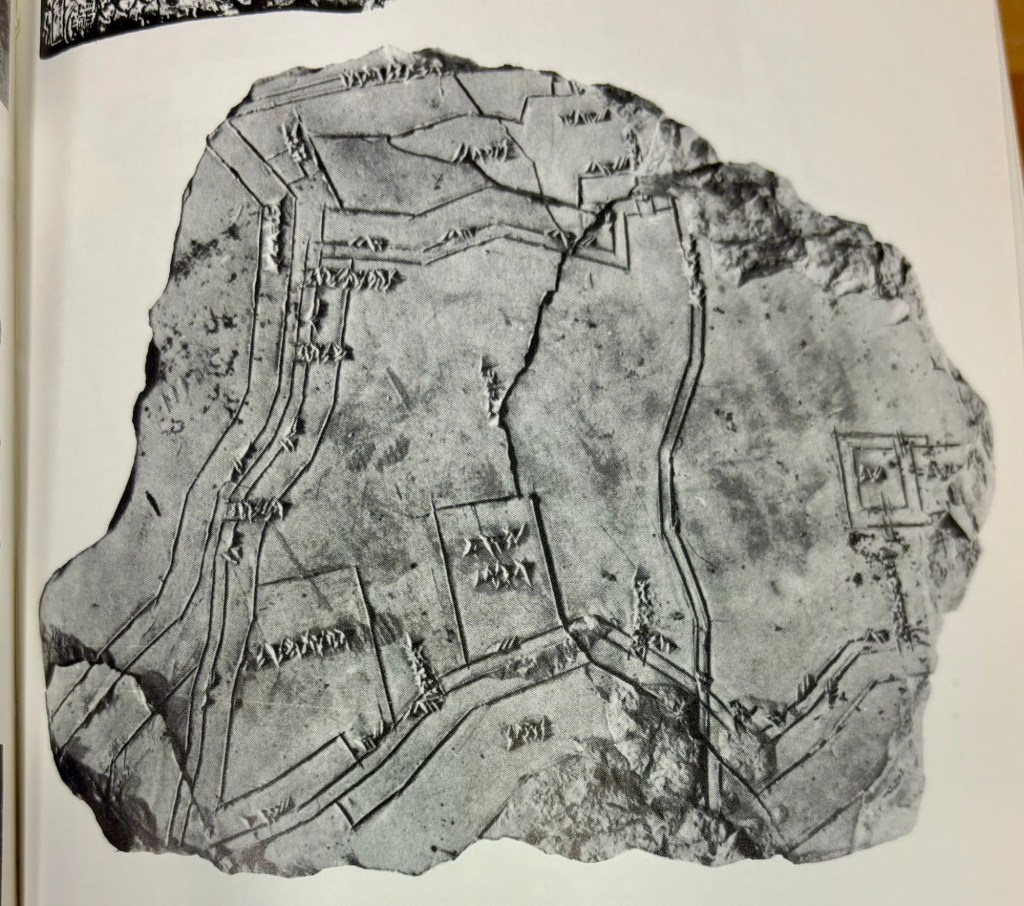
Map of Nippur

Posted in Uncategorized

Old Hand’s Indonesian Voyage 1–A reblog of an earlier post

wpid-2014-12-08-14.04.04.jpg.jpeg“Ashadu-an-la…”
Came the loud scratchy blare of loudspeakers over the still anchorage.
“Ilaha illa allah…”
I rose disgruntled and ascended the companionway to see McWhirr standing on deck, still in his black watch coat despite the fast-
rising heat.  His normally stark, grim profile appeared transformed by the dawn light with an aura of rapturous praise.
Not wanting to disturb his meditations, I returned below and put on a pot of joseph.

After a harrowing passage through
the Sunda Strait, we’d anchored in the Sunda Kelapa harbour the night before under the tall spires of north Jakarta.  I’d had a fitful sleep, and the portentous imagery of my dreams had been confounded by a blasted, bleeping racket that still echoed over the calm anchorage.  Turns out we’d brought up just off the Ancol Theme Park.
McWhirr came below.  I handed him a cup and ventured:
“Captain, why have we sailed into this steaming latitude?”
For indeed, it was cruel muggy and a pall of charcoal gray hung over the city.
McWhirr lit his pipe and said:
“I was but a green swab surfing the long fetch of the seven cyber-seas when I first heard of the East Indies.  That was a simpler time, when a single multinational corporation called the IndiaRubber.com ruled the whole archipelago.  Now it’s dog eat dog, with upstart pirates trying to challenge the Dutch spice monopoly and their quasi-governmental powers by fair means or foul.”
“But take care son,” he said darkly, “one word from the Dutch, colonial CEO and we could be standing before a firing squad before you can say: Garcia Lorca.”

Posted in Uncategorized

The crew sees the Wayang Kulit

“To the Batavian Arms,” said McWhirr to the becak driver.  How this small guy was going to haul us and our seabags in the little tricycle was beyond me. His name was Rubio.  He was a grinning, eager pilot who pedaled like a fiend and navigated Jakarta like some Vasco de Gama of the alleyways.
Rubio brought up before the crumbling, neo-classical facade and we passed through the weathered teak door into the club.  While McWhirr ordered a couple pints I looked around.
A Strawberry Alarm clock tribute band blasted onstage.
Soon McWhirr came with the drinks and said:  “The barkeep says Remy comes in every night around 2200 hours. Might as well enjoy the show.  Here’s to the Queen.”
In came a gamelan orchestra followed by the shadow puppeteer who, smoking a kreteck, smirked left and right to all patrons–especially the fat ones up front who swilled arak and spoke in conspiratorial tones to the kriss-bearing lugs behind them.
The place went dark.  An oil lamp cast fantastic shadows over a large, translucent screen that flickered and danced with frenzied life.  I was enthralled by the spectacle of phantom armies leveled by the cannonade of imperialist might as men with weeping, bamboo flutes were led away shackled. The gamelan’s slow rhythm seemed to fall over the whole archipelago in a haunting drone of pain that echoed the undying breath of ancient, Indonesian spirit; as if Rama’s return to his kingly estate mirrored their own tortured story; and Hanuman’s revolutionary, healing energy, born with the very earth of mankind, must ever suffer cyclical defeat and triumph–an ebb and flow whose influences lie beyond the sublunary sphere.  It’s a story old as history–and fresh as the play of light on a silk screen.
The screen went dark and then emblazoned by the bold legend: Samsung

Posted in Uncategorized

Old Hand’s Indonesian Voyage – alternate version

“Ashadu-an-la…”
Came the loud, static blare of loudspeakers over the still anchorage.
“Ilaha illa allah…”
Disgruntled at the interruption of my much needed sleep, I rose from my bunk and ascended the companionway to see, still in his black watch coat despite the fast-rising heat, Saturnius McWhirr already on deck.  His stark, grim profile seemed transfigured by the dawn light with an aura of rapturous praise.  I had always thought he was of the Zoroastrian persuasion.

Not wanting to disturb his meditations, I returned below and put on a pot of joseph.

After a harrowing passage through
the Sunda Strait, we’d anchored in the Sunda Kelapa harbour the night before, under the tall spires of north Jakarta.  I’d had a fitful sleep, and the portentous imagery of my dreams had been confounded by a blasted, bleeping racket that still echoed over the calm anchorage.  Turns out we’d brought up just off the Ancol Theme Park.
McWhirr came below.  I handed him a cup and asked:
“Captain, why have we sailed into this steaming latitude?”
For indeed, it was cruel muggy and a pall of charcoal gray hung over the city.
McWhirr lit his pipe and said:
“I was but a green swab surfing the long fetch of the seven cyber-seas when I first heard of the East Indies.  That was a simpler time, when a single multinational corporation called the IndiaRubber.com ruled the whole archipelago.  Now it’s dog eat dog, with upstart pirates challenging the Dutch spice monopoly and their quasi-governmental powers.

“But take care son,” he said darkly, “one word from the Dutch, colonial CEO and we could be standing before a firing squad before you can say: Garcia Lorca.”