More beautiful poetry by St.-John Perse.
Tag: sailing
Joseph Conrad’s Chthonic Folly
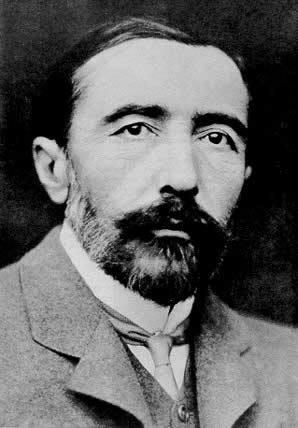 Joseph Conrad started writing relatively late in life. He drew heavily from a long career as master mariner in the era of European, eastern expansion.
In A Personal Record he tells of the first impulse to write. Sitting idle in his room at Bessborough Gardens he remembers his initial encounter with the man who inspired his first novel, Almayer’s Folly.
Conrad was 1st mate on a cargo steamer going up a Malaysian river to deliver supplies to a remote outpost. On board was a pony which the Dutch trader, Almayer, has ordered from Bali:
The importation of that Bali pony might have been part of some deep scheme, of some diplomatic plan, of some hopeful intrigue. With Almayer, one could never tell. He governed his conduct by considerations removed from the obvious, by incredible assumptions, which rendered his logic impenetrable to any reasonable person.
The same might be said for the whole colonialist adventure. But this misguided effort is constantly undermined by inscrutable forces antithetical to the rigid mindset of the European.
Conrad describes the limp pony as he hoists it onto the dock in a sling:
…his aggressive ears had collapsed, but as he went slowly swaying across the front of the bridge, I noticed an astute gleam in his dreamy, half-closed eye.
Upon releasing the sling, the pony immediately flattens Almayer and bolts for the dense forest- an outcome which Almayer meets with perplexing indifference.
But Almayer, plunged in abstracted thought, did not seem to want the pony anymore.
He embodies the ambiguous, often childish, desire for dominion over the remotest corners of the earth; a tragi-comic symbol of imperialist hyper-extension who, despite his convoluted plans, succumbs to uncontrollable forces and, ultimately, to dissipation.
Listen to Almayer’s halting, distracted monologue as he reveals to the narrator something of his frustrations:
“…the worst of this country is that one is not able to realize…” His voice sank into a languid mutter. “And when one has very large interests…” He finished faintly. “…up the river.”
Conrad was to later use such chthonic imagery and musical, fractured dialogue in his masterful indictment of imperialism: Heart of Darkness.
A Personal Record tells how the encounter with this “factual” character was instrumental in the birth of a long literary career; a career in which he brought to fictional art an unequaled degree of expressiveness. With the concision of the sea language in which he was so fluent-a language as pithy as poetic verse-Conrad condensed into the microcosmic image of Almayer all the absurdity and hubris of the expansionist age.
Conrad goes on to imagine meeting his alter ego in the Elysian fields and confessing:
It is true, Almayer, that in the world below I have converted your name to my own uses. But that is very small larceny…Your name was common property of the winds…You were always complaining of being lost in the world, you should remember that if I had not believed enough in your existence to let you haunt my rooms in Bessborough Gardens you would have been much more lost.
Though a failure in his wind-born life, Almayer triumphs in the end through Conrad’s belief in the ability of his protagonist to express something deep and dark in the psyche of modern man. This ability is all the more poignant because of Almayer’s fictive power. It is a power that confers reality.
…if I had not got to know Almayer pretty well it is almost certain there would never have been a line of mine in print.
Though I suspect Conrad’s Personal Record may not conform entirely to fact, his character attains a loftier status. He becomes a symbol of human folly that mere veracity cannot express.
Easter 1916 by W.B. Yeats
I’ve been working on 2 guest posts for Katie Sullivan’s wonderful blog, the D&A Dialogues. The experience has inspired this video. I will reblog the posts here on A View from the Wheelhouse.
Listen-Tea time on Old Hand
Sailing the Bardo of Rebirth with McWhirr
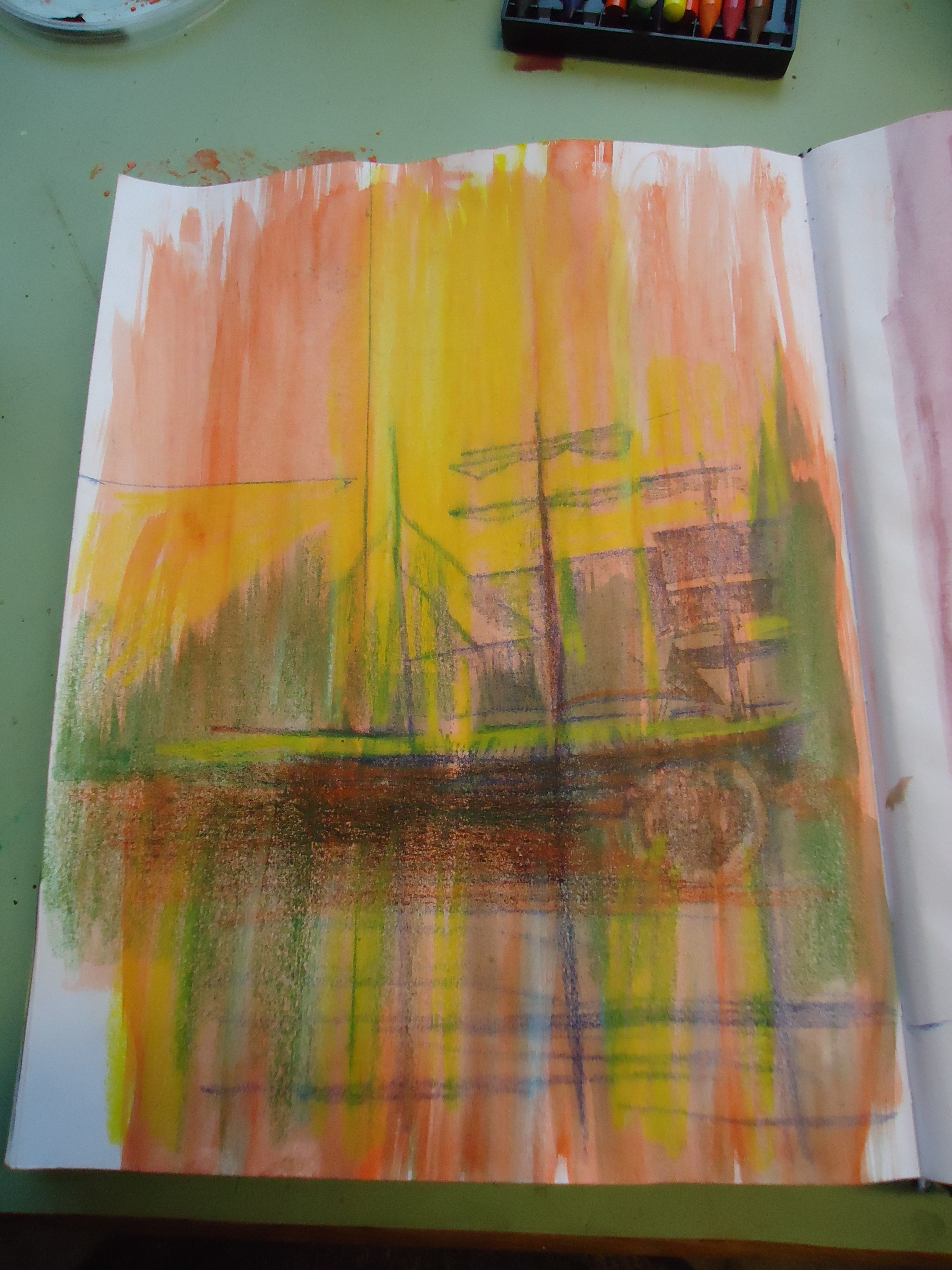 Cats paws darkened the blue reach of Puget Sound beyond Skiff Point to the north. I went below to shut down Phyllis, my Norwegian diesel engine (named after my mother,) trusting the breeze would hold and keep us off the shallow bank south of Fay Bainbridge park. There’s nothing so peaceful as that moment when the wind lifts and the engine is shut off. Old Hand sails better without human interference close-hauled, so I sit back and listen to the sound of water moving along her hull as she gathers speed along Bainbridge Island’s east shore.
It was lovely. We had attained a state of harmonious accord between man and boat in the mandala of winds, and that single point we occupied at that particular moment in time and space was golden perfection. I try to seize such moments on the fly and, by retelling them, prolong existence itself and sail with the generous breeze into eternity.
“Look sharp, Mister Spencer.”
The resonant voice was hoarse, as if graveled by long watches in the north Atlantic-as if it emerged from the very depths of the bilges.
“Ready about.”
“Ready about.”
McWhirr paused then called:
“Helm’s alee!”
I let go the jib sheet as the bow came across the wind and hauled in for a port tack toward deeper water northeast.
“Nicely done, lad. Ye’ll be a sailor before long.”
McWhirr is a pain in the neck sometimes. He’s a relic of working sail and can be as dark as Ahab in rehab on a bad hair day.
But such a breeze can soften a heart encrusted by long watches over icy seas. McWhirr stood stark against the red sky like a weathered piling on a rocky cape. Light flickered through the dark shrouds behind him as if projected on a movie screen.
“What do you make of the Ancient Mariner’s yarn, lad?”
– through soul’s stations he sails…sweetly, sweetly blew the breeze…sigh of compassion that pervades all creation… repents his cruel slaughter of the innocent bird and sees divinity in all beings… it raised my hair, it fanned my cheek…essential reality…wisdom and compassion combined…
“It’s a strange tale.”
McWhirr brooded as if some heavy recollection had made him grow, if it were possible, even more saturnine.
“Aye, we all carry the albatross’ weight around our necks.”
-tangled lines lost in fouled line-lockers…it mingled strangely with my fears…endless dream pilgrimages through foreign city streets looking for misplaced baggage… He loved the bird who loved the man… all those times too slow on the uptake, clueless or proud... who shot him with his bow..neglect of kin…Mom’s eyes…executors of karmic law…archons of the muddy sphere in which my life is, more or less, firmly moored …Oh, my neck.
“What about that part where he must repeat his tale endlessly to strangers?”
“I don’t know. It sounds like a writer I know. But I won’t mention any names.”
The Rhyme of the Ancient Mariner
I shot this video yesterday while cruising slowly down Bainbridge Island’s east shore toward Point Monroe and Port Madison beyond. Although my speed was a mere 2 knots, it was one of those days where all came together in a perfect moment. The only sign of wind I saw wind was along my course-
…on me, alone, it blew.
A reading from Ulysses
In honor of Bloomsday
The Rapture of McWhirr

Stars vanished in the rosey dawn and the earthen red facade of the old seafront was reflected on the smooth water of Port Townsend Bay. I served up kippers and joe to Captain McWhirr as he plotted our course across the Strait of Juan de fuca, drawing arcs over a chart of the eastern Straits with an aged compass that might have demarcated the first measured globe.
“Best we are underweigh at 0800 hours.”
“More joseph sir?”
Smiling strangely serene, he said:
“Aye, That’ll do nicely, old son.”
We headed out across the flat surface of Admiralty Inlet with the last of the flood, keeping Partridge Point fine on the port bow.
“ Now lay our course 318 degrees toward the Romeo Alfa buoy. Call me at slack water.”
“318 degrees it is, sir.”
McWhirr went below, leaving the weight of command to me. The calm, blue surface of the straits reached far westward. The regular thump of the diesel engine set a rythym that wove songs of lost schooners into our widening wake, and drew us, with the swirling kelp, into deeper sound.
O our packet sails tomorrow…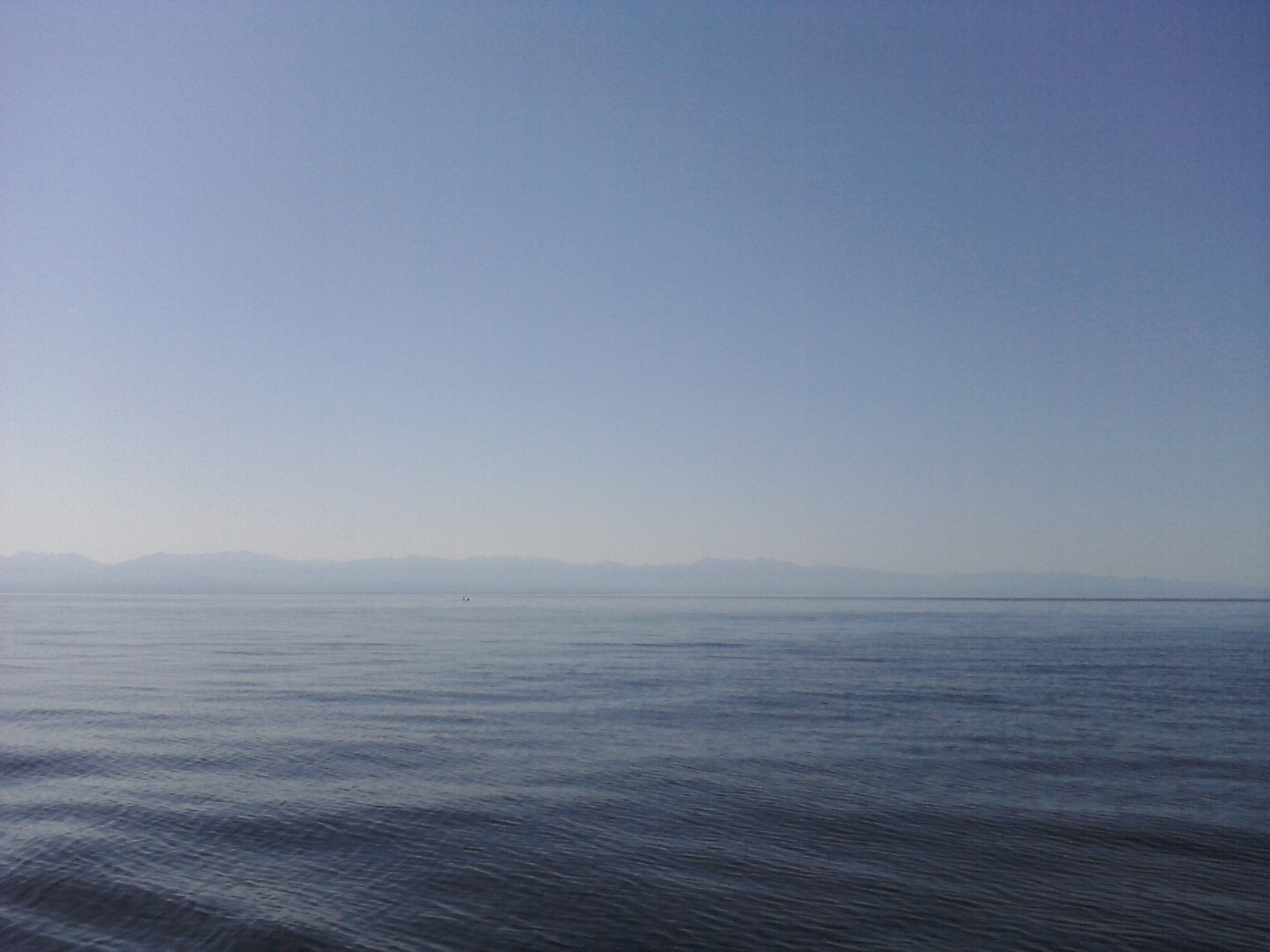
We bore away northwest. An eagle soared in high cirrus where the great indraught of the sea swept past the headland into the inlets of soul. Gulls were flattened across the blue vault of sky. The bell sounded and the sea heaved in steady writhing swells from the Pacific Ocean as the torpid heat drove all energy from the weary face of the world.
Shal-low-O- Shallow Brown…
A blip on the radar screen moved toward us through the seven concentric circles like a wrathful diety seeking tribute-like an archon who held Old Hand in irons, bound to earthly time, and from which we yet nursed a forlorn hope of deliverance.
And it fills me heart with sorrow…
The waypoint cross of the GPS fixed the moment on the still sea. All space was enclosed in the mystic compass rose, and our voyage was but another leg in man’s perpetual departure beyond the world’s edge; to where the the sunlight’s descent crosses the horizon’s sparkling band, and time intersects infinity.
Shal-low Shallow Brown
I went below to find McWhirr gone. There was only a tattered copy of Virgil’s Aeneid. A passage highlighted in gold caught my eye:
From me learn patience and true courage, from others the meaning of fortune.
McWhirr has left for the far shore, cut his painter and retreated through the diaphanous veils that seperate worlds. In a realm between the offices of master and mate he floats supine, hands clasped over his white beard, in surrender to the ebbing stream where all noble hearts must finally hie. He was the true sovreign of the watery sphere which had long held me captive. He is the enlightened aspect of my inner Captain Bligh, Noah of my being, guiding me safely past malestroms where the faithless whirl forever amid skeletal hulks and drowned chain.
Here’s a beautiful rendition of Shallow Brown by Sting.
Wind Lyre
My Saxon lyre played by the wind in Manzanita Bay.
Esoteric Sailing 101-The Gnostic Gibe
The light north wind wafted over the sound and sent cats-paws scurrying across the blue surface of the water . We were sailing down wind, up Colvos Passage down Colvos Passage before the wind, in the afternoon before the flood.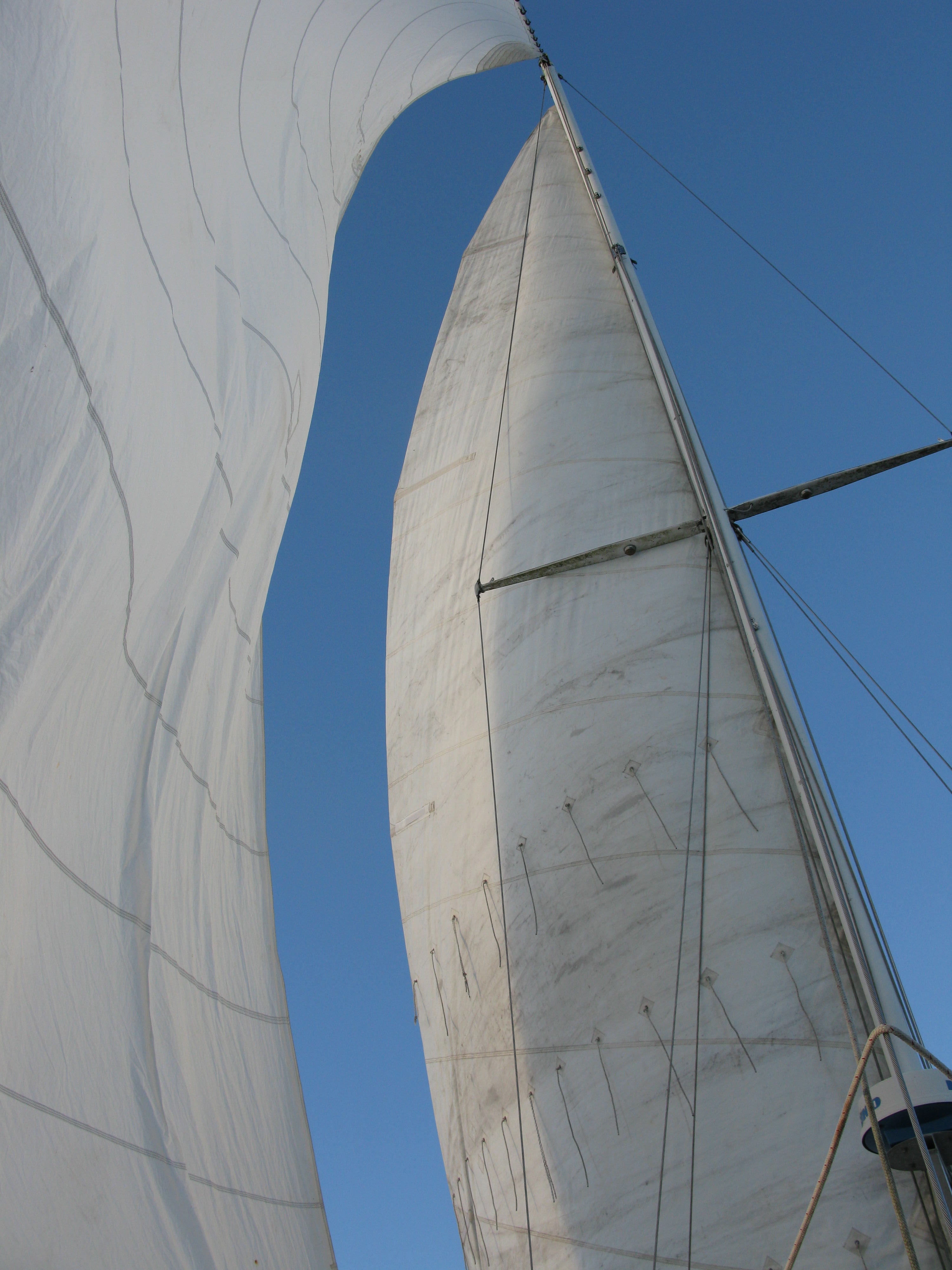
“Not yet,! Wait until I say helm’s a’ weather!” Bellowed McWhirr.
The big sail had collapsed in at heap on the fore stay with the forlorn aspect of a nihilist’s nose-rag.
“Steady…”
Then it luffed, as if thinking it over.
“… up a point.”
Old hand flew into the wind. The sail rose.
“Now bear away a touch.”
“Bearing away, sir.”
The genoa curved lovely over the port bow as I nudged the helm up, and Boreas’ own sweet northerly began to pull Old Hand slowly across Colvos on the opposite tack.
“That’s better lad. Ye’ll be another Joseph Conrad before long.”
I leaned against the anchor box to rest.
We flowed down the pass up sound…or is it up the pass downsound?
The gentle breeze caressed my face.
Aft, large eyes peered from the vegetation along the shore. Primeval beasts watched hungrily as we sailed back eddies past a dense jungle.
A derelict lumber mill hove in sight as we approached the opposite shore; it’s decayed pilings looked like a dejected stand of petrified loggers who had just cut down the last tree on earth.
“Ready to gibe, Mister Spencer.”
“Ready to gibe.”
“Helm’s a’ weather.”
The sail fouled in a hopeless tangle as Old Hand fetched up on the bank with a low rasping sound. She collapsed suddenly in a pile of flotsum.
She went down, by god.
“Ya scow-banker! I never saw such lubberly sail handling!”
With a volley of abuse, McWhirr grabbed a top maul and came at me like blue blazes with a bad attitude.
But then I had a flash. I saw that this whole maritime catastrophe was a mere shadow-a play of light. All the stormy seas and foul currents fate pitches at this corporeal vessel are no more substantial than an Arctic aura; and no less sublime in scope and meaning.
I really had it over McWhirr.
I was Captain now.
I flew into the sky as McWhirr tied a bowline on a jib sheet and tried to lasso my leg.
“Come back down here ya square-headed haddock! I’m more real than ye’ll ever be!”
My heart pounded in my ears. I looked up to see Old Hand nearing the shore.
“Ready to jibe, Mister Spencer.”
The sawmill had vanished in the blinding sunlight.
“Let’s put her about shipshape this time.”
 A View from the Wheelhouse